
Somigli: "When an Archaeological Site Becomes a Tourism Resource"
Below is a summary of the speech by Lapo Somigli, activity manager of the ArcheTourDev project, at TourismA 2026.
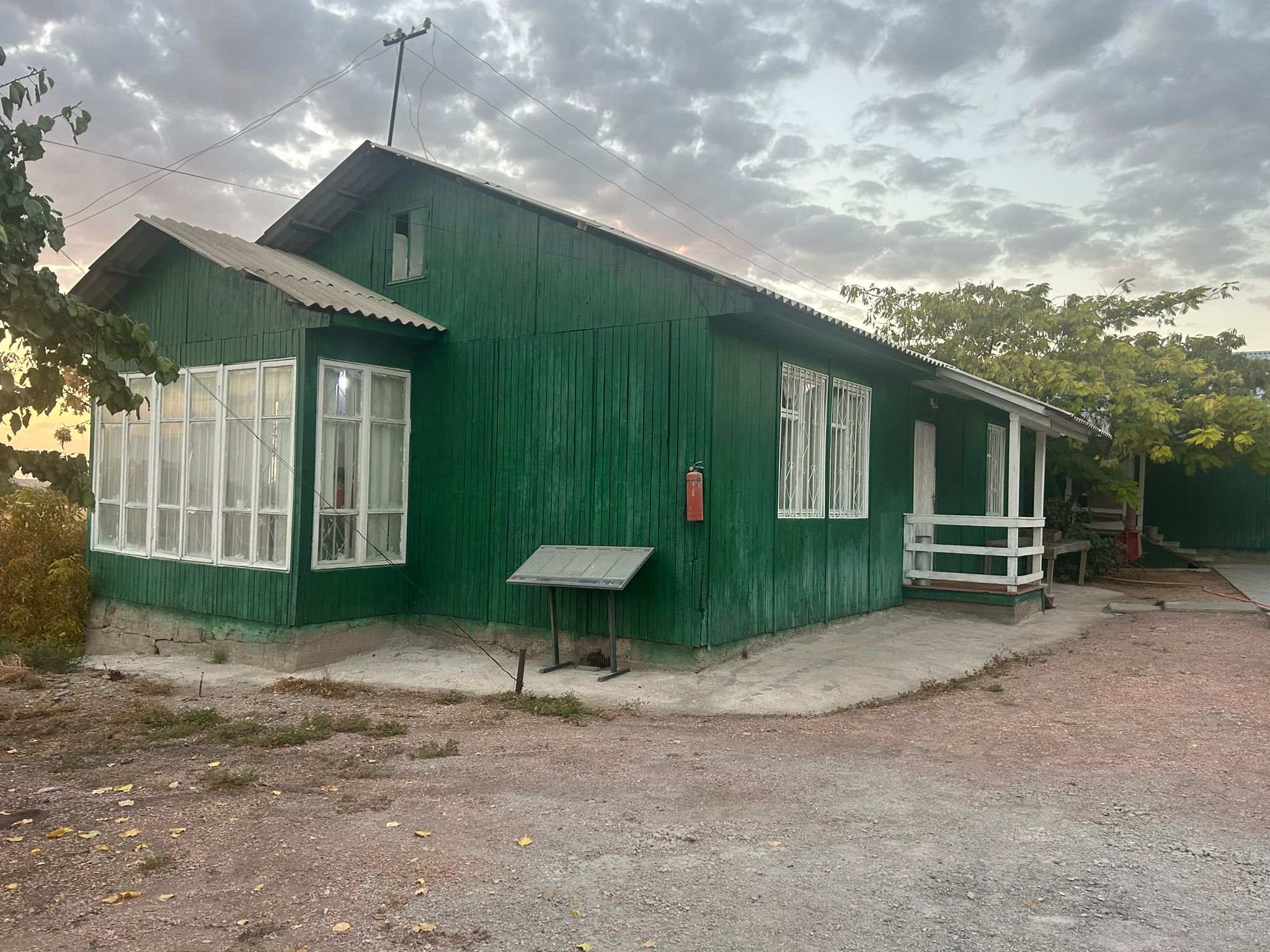
Some of the buildings of the Soviet archaeological mission base, established in Dvin during the 20th century.
The archaeological site of Dvin is today a complex and multifaceted setting, both because of its size and its history. In the medieval period, the city covered more than 100 hectares, making it a vast and extensive settlement. This scale is still reflected in the distribution of the archaeological areas, which do not form a compact core but are scattered throughout the landscape and partly integrated into the present-day environment.
Dvin, the “dispersed capital”
The main identifiable areas are:
- the central district, where stone structures predominate, although they are no longer preserved above ground;
- the citadel and the northern district, located on higher ground and characterised by mud-brick structures;
- the area known as the “market”, separated from the rest of the site and located on the outskirts of the modern settlement.
Today, these areas are surrounded by an agricultural village and set within a particularly fertile rural landscape. This makes the site fascinating, but also difficult to interpret, as the archaeological remains appear fragmented and are not immediately understandable to visitors.
From a historical perspective, Dvin has a long history of productive activity. From the 5th century AD, it became a capital and remained an important centre throughout the Middle Ages, until the 13th century, when historical sources describe its sudden abandonment following the Mongol invasion. However, more recent stratigraphic investigations have challenged this interpretation, showing that occupation continued beyond this period and suggesting a more complex and less traumatic process than previously thought.
Urgent conservation needed
The site also has a long history of archaeological excavation. The first investigations date back to the early 20th century and continued through more recent campaigns, including those conducted by the University of Florence since 2021.
This long succession of excavations has also left significant conservation challenges. The structures, particularly the mud-brick remains of the citadel, are now severely deteriorated. A comparison between documentation from the 1950s and the current condition reveals clear deterioration, making targeted conservation measures increasingly urgent.
The main objectives of the ArcheTourDev project can be summarised as:
- halting the deterioration of the structures;
- improving the site's legibility;
- making the area more accessible and understandable to visitors.
A site that is difficult to “appreciate”
One of the main challenges is communicating the site's value. While its importance is immediately clear to archaeologists, Dvin can be difficult for non-specialist visitors to understand.
For this reason, alongside conservation work, the project includes the creation of visitor-support tools, such as information panels and guided routes, designed to restore meaning and coherence to the site's complex topography.
Another key element of the project led by the SAGAS Department is the involvement of local staff. The aim is not simply to intervene on the site, but also to build local expertise capable of ensuring its long-term care.
This includes training restorers and local professionals, an approach already tested in other contexts, with the goal of leaving knowledge and practical skills within the community for future maintenance.
The Soviet base as a “tourist attraction”
One particularly fascinating feature of Dvin is the base of the Soviet archaeological mission, established in the 20th century between the citadel and the central district.
These buildings, made partly of mud brick and partly of wood, are not only historical evidence but also a potential attraction for visitors, thanks to their ability to evoke the everyday life of the archaeologists who worked at the site. Their interiors are remarkably well preserved and still contain Soviet-era furniture.
The complex also houses the mission's library, containing rare and important books for the study of Dvin.
For this reason, the project also aims to enhance these buildings by restoring them and incorporating them into the visitor experience.
In particular, the ArcheTourDev project intends to:
- restore the existing buildings while preserving their original appearance as far as possible;
- reconstruct some currently deteriorated areas, such as laboratories and storage rooms;
- adapt these spaces for exhibition purposes, making some of the archaeological finds accessible to visitors.
The ultimate goal is to create an integrated system in which the archaeological site and the history of its research reinforce one another, offering visitors a more complete understanding of Dvin, its potential and its extraordinary historical richness.
Last update
20.08.2026