
“Ferdinandi: ‘Much has been done, but there is still a lot left to discover.’”
Interview with Sergio Ferdinandi, Vice President of ISMEO and co-author of the volume Aruch. Rediscovering a Medieval Armenian Capital. Archaeological Campaigns 2022–2025
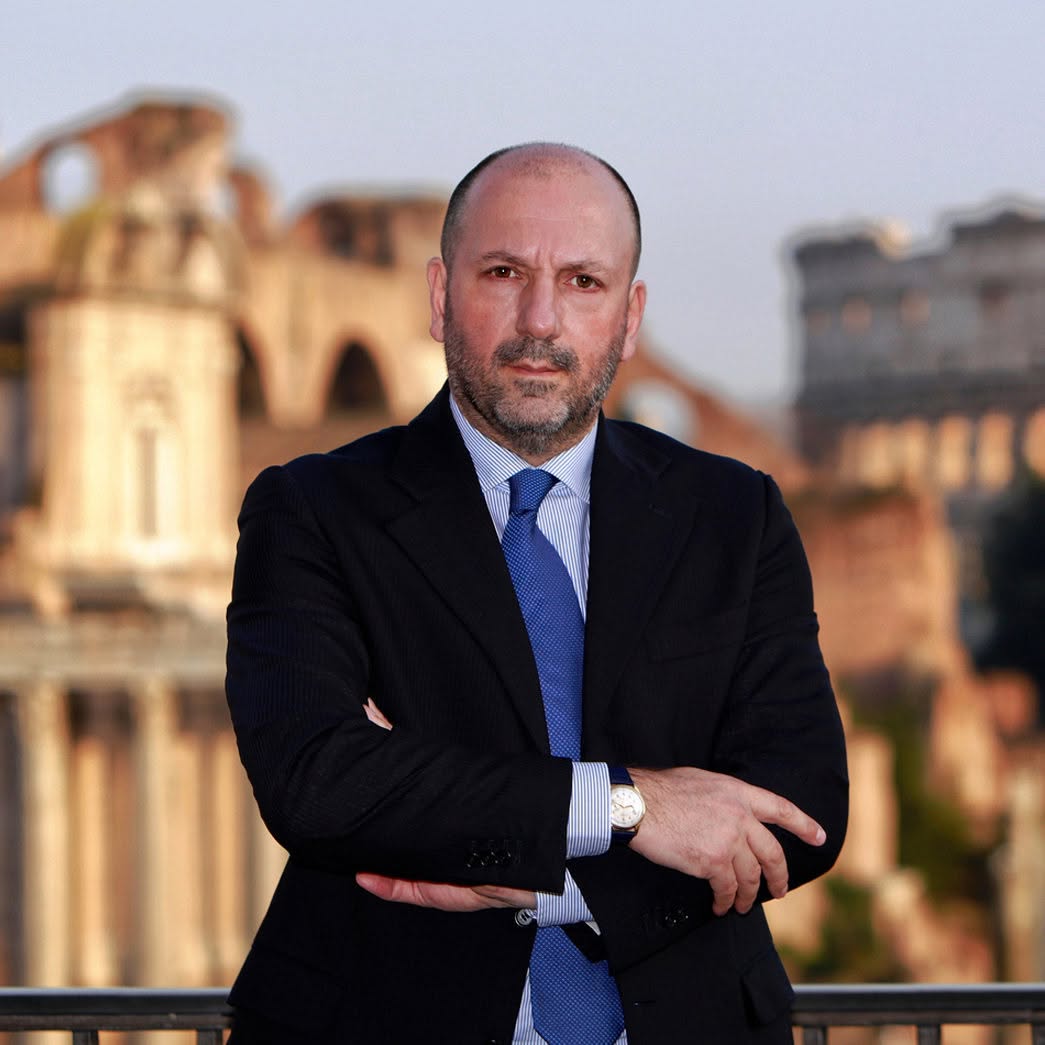
Professor Ferdinandi, does this volume represent a turning point compared with traditional archaeological publications?
Traditionally, volumes devoted to archaeology focus mainly on scientific research: excavations, finds, ceramics, and stratigraphy. This book seeks to bring together two dimensions. On the one hand, it presents the story of the archaeological research itself and the excavation campaigns we have conducted at Aruch since 2022; on the other, it reflects on the future of the site, on the conservation, restoration, and enhancement activities we are carrying out, and on the development prospects for the entire archaeological area. In this sense, the volume aims to be not only a scientific record, but also a tool for shaping the future and promoting this extraordinary heritage. This has been especially true since 2024, with the launch of the AICS project ArcheTourDev, under the auspices of the Embassy of Italy in Yerevan. As ISMEO, we are working in perfect harmony with the University of Florence, Department of SAGAS, and the Opificio delle Pietre Dure of Florence. The project involves restoration and enhancement interventions at three sites of primary importance for Armenian history: Aruch, Dvin, and Garni. I would like to take this opportunity to thank colleagues and friends Alfonso Di Riso and Alessandro Ferranti, Italian ambassadors to Armenia respectively from 2021–2024 and from 2024 to the present, who have done and continue to do a great deal to support Italian archaeological missions in Armenia and to further strengthen the cultural, scientific, and economic dialogue between our two countries.
How did the volume come into being?
The book emerged from the research and excavation campaigns carried out between 2022 and 2025. It is the result of collective work involving archaeologists, restorers, architects, engineers, and scholars from various institutions. The volume is also honored to include prestigious introductory contributions, beginning with those by Zhanna Andreasyan, Minister of Education, Science, Culture and Sport of the Republic of Armenia, and Alessandro Ferranti, Italian Ambassador to Armenia.
The volume is organized into several sections. How is it structured?
The book is essentially divided into two major parts. The first is devoted to the excavation campaigns and the discoveries made at Aruch. Surveys and archaeological investigations have confirmed the exceptional importance of the site, which became the capital of Armenia at a crucial moment in its history. Following the Arab conquest of Dvin in AD 641, the Armenian nobility chose Aruch as the new seat of power. Many of the symbolic and architectural elements previously found at Dvin were recreated here: the great basilica, the ecclesiastical complex, the princely palace, and numerous other religious and civic structures. The site also includes a chapel, a medieval cemetery, and, about two hundred meters away, a large fortress that represents one of the most significant examples of this type of architecture in Armenia. The second part of the volume is devoted to documentation, conservation, and enhancement activities, including the first restoration design studies, particularly concerning the medieval fortress.
Which institutions contributed to this work?
The project is strongly interdisciplinary. In addition to ISMEO and the Institute of Archaeology and Ethnography of the National Academy of Sciences of the Republic of Armenia (IAE NAS RA), colleagues from the Opificio delle Pietre Dure contributed specialist expertise in restoration. The Department of Engineering of the University of Rome Tor Vergata, with which ISMEO has signed a specific cooperation agreement, also participated. In particular, the Tor Vergata team collaborated through surveying activities and engineering analysis. During the 2025 campaign, highly detailed surveys were carried out using advanced instruments on both the fortress and the other structures of the monumental complex. All of these data constitute the basis for future conservation and enhancement interventions. Colleagues from the University of Florence, Department of SAGAS, who are working with us on the ArcheTourDev project, also contributed to the volume. Finally, I believe it is only right to acknowledge the fundamental support provided over the years by private partners supporting the archaeological mission, among whom I would mention Poste Italiane, Canon, Archeoservizi, and Italian Digital Revolution.
In recent years, attention toward Aruch seems to have grown considerably. Is that the case?
Yes, very much so, fortunately. It is evident that the work carried out in recent years has helped increase awareness of the site’s importance. A particularly significant sign is that, in recent years, the Armenian Prime Minister and numerous members of the government have attended Armenian Christmas celebrations inside the great basilica of Aruch. More recently, the Minister of Culture chose Aruch as the symbolic venue for the presentation of European Union awards. Such decisions demonstrate that this place has once again acquired an important role in the country’s imagination and identity. At the same time, protection and improvement measures have been launched, reflecting growing attention from local authorities. Access roads have been improved, making visits to the site easier and more comprehensible, also thanks to the installation of dedicated information panels. In recent months, the government has decided to restore a roof to the monumental dome of the Basilica of Saint Gregory, which had collapsed centuries ago, and is working on a complete refurbishment of the interior, including flooring, electrical systems, and fixtures.
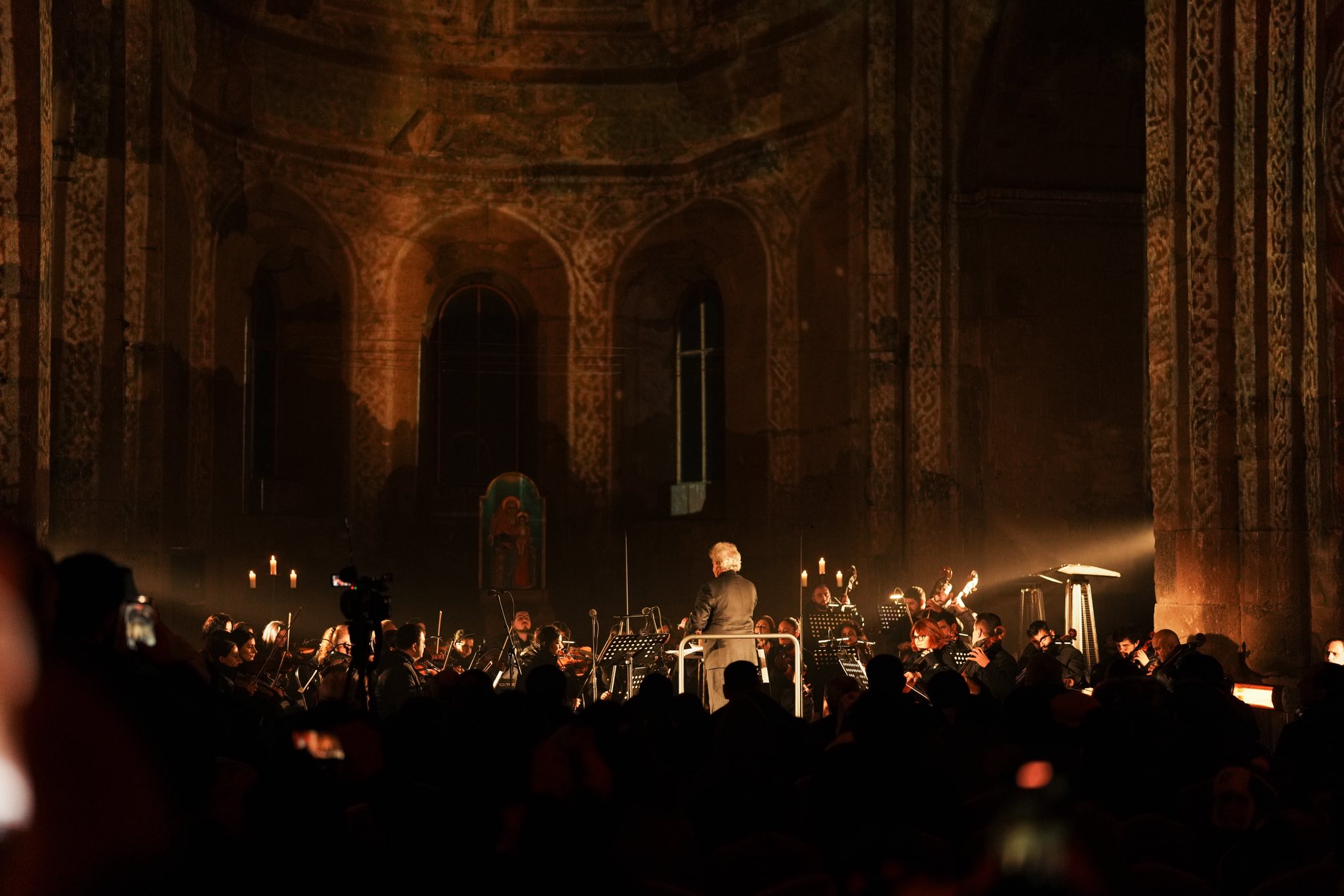

Some images of the Armenian Christmas celebrations inside the Basilica of Saint Gregory.
Has the Italian involvement contributed to this rediscovery?
I would say it has been a driving force behind it. Suffice it to say that in 2021, when I came here for the first time knowing the site only through documentary sources, I had difficulty finding it because it was little known even among local people. When an international project invests resources, expertise, and attention in a site, it inevitably helps reveal its value to the local community and institutions. Seeing Aruch become a symbolic, frequented, and recognized place today is a source of great satisfaction. It means that the work carried out has not remained confined to the scientific sphere but has produced a real impact on the territory. This positive transformation is still ongoing, with many goals yet to be achieved, naturally in agreement with the local authorities and the welcoming population living around the site.
How did your interest in Aruch begin?
When my colleagues at the IAE NAS RA gave me the opportunity to choose a project to follow, I chose Aruch without hesitation. The first time I visited the site, I was struck by its extraordinary uniqueness. We are located along one of the most important routes linking West and East, one of the historic corridors of the Silk Road. In many respects, the entire monumental complex recalls the great capital of Dvin, but it has one fundamental advantage: its state of preservation is considerably better. The great Cathedral of Saint Gregory, one of the largest basilical cult buildings, the castle, and numerous other stone structures remain clearly legible and allow an exceptional understanding of the city’s organization.
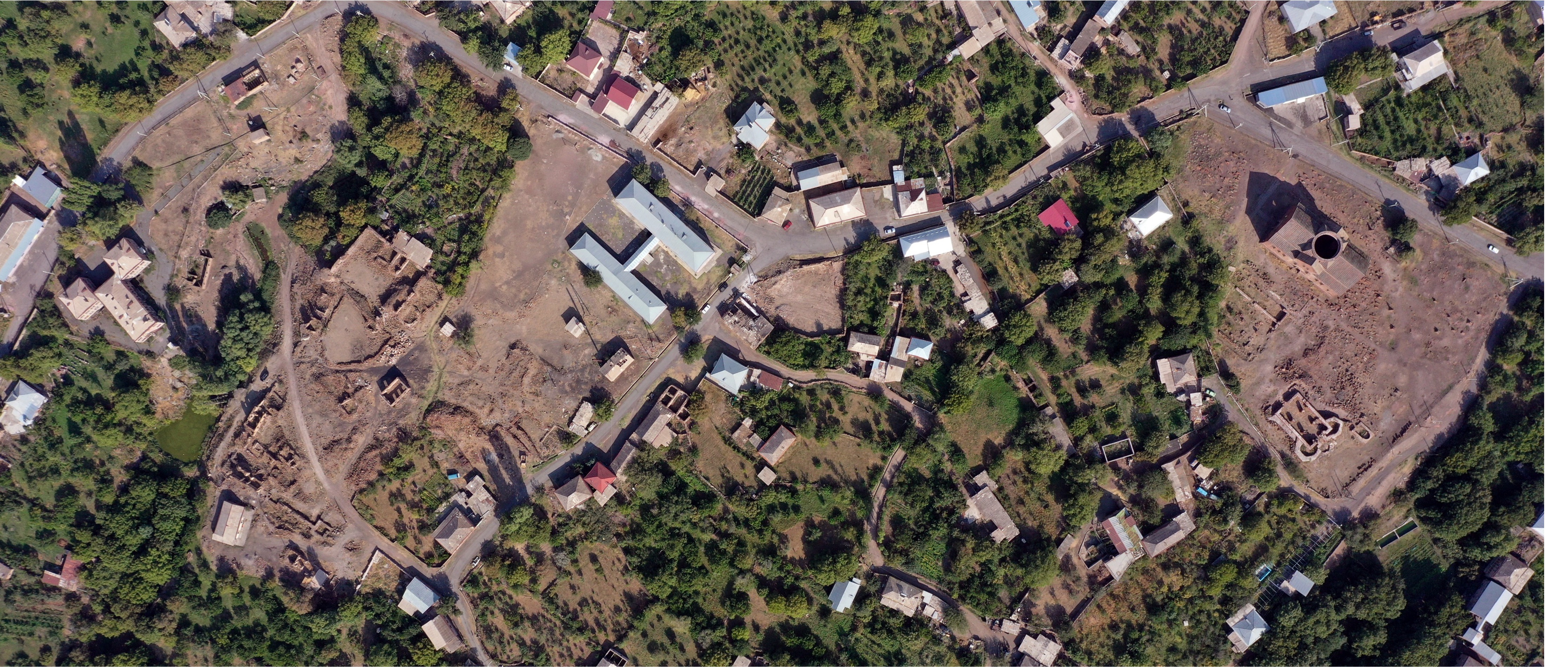
Aerial View of Aruch.
Today the site coexists with the modern village…
It is an extraordinary opportunity. Aruch is a large archaeological park coexisting with an inhabited agricultural village. In houses and farmsteads one often finds architectural fragments and ancient materials reused over the centuries. Moreover, the community is very close to us in the initiatives we undertake. This makes the relationship between heritage and community particularly interesting and fruitful. The goal, which should be shared by everyone engaged in this work, must not be limited to scientific research alone, but should also promote the enhancement of the site in order to create prospects for economic and cultural development and opportunities for young people.
Is there still much to discover?
A great deal. We are dealing with an area that could potentially become an archaeological park, probably unique in the Caucasian region. We have identified numerous areas that deserve priority investigation. Some sectors of the fortress, for example, still require preliminary interventions and the resolution of bureaucratic issues related to modern buildings constructed within or immediately adjacent to the archaeological area. We know that the site’s potential is enormous and that much information about its history has yet to emerge.
How long will the archaeological mission continue?
It is difficult to make precise predictions. This year we completed the fifth excavation campaign, working in relatively limited areas. The duration of the project naturally depends on the availability of funding and on the time required for the design and implementation of conservation and enhancement works. What I can say is that there is strong cooperation between Armenian and Italian institutions and an excellent relationship with the local population. In recent years important progress has been made: access roads have improved, information panels have been installed, and the symbolic monument of the archaeological area, the Basilica of Saint Gregory, is becoming increasingly well known and visited. Much has been accomplished, but much still remains to be done.
Where can the volume Aruch. Rediscovering a Medieval Armenian Capital be obtained?
The volume is available on the official ISMEO website: www.ismeo.eu.
Information on the activities of the Archaeological Mission of Aruch and the “Incastellamento” of the Silk Road can be found at: silkroad.missionearcheologica.it
Last update
03.07.2026