
Ferdinandi: “At Aruch, ISMEO combines historical research and cultural heritage enhancement.”
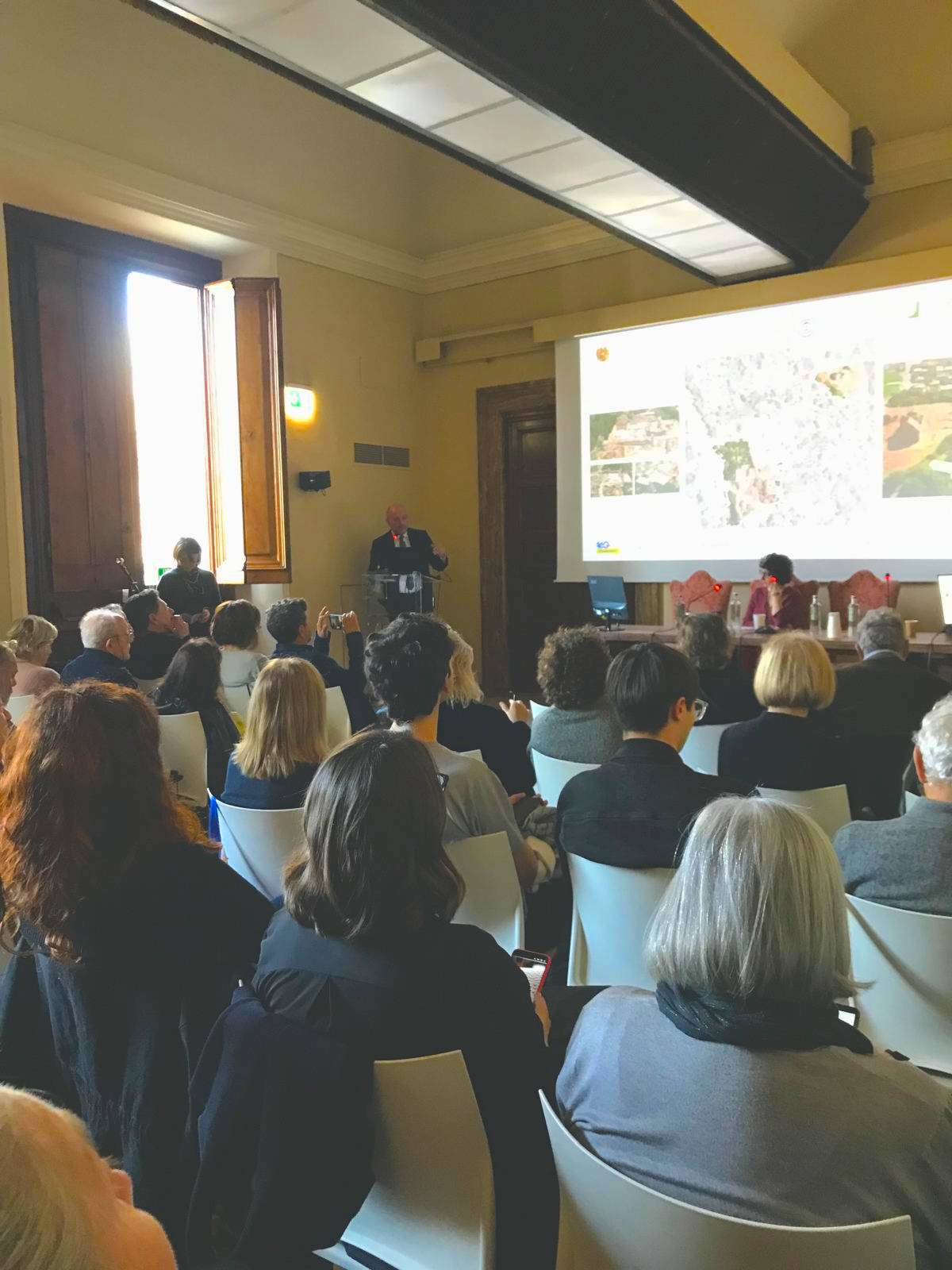
Sergio Ferdinandi, Vice President of the International Association for Mediterranean and Oriental Studies
As part of TourismA 2026, Sergio Ferdinandi, Vice President of the International Association for Mediterranean and Oriental Studies (ISMEO) and coordinator of the ArcheTourDev project at the Aruch site, presented an overview of the research carried out in Armenia, highlighting the role of the region as a frontier area between different political and cultural worlds. This marginal position encouraged the development of fortified settlements and complex defensive structures.
One of the main case studies is the site of Aruch, described as one of the most important archaeological complexes of medieval Armenia. The area, which today hosts institutional ceremonies, preserves traces of a major urban centre active between the 7th and 10th centuries, characterised by exceptionally rich archaeological evidence.
Particular attention was devoted to the site's fortifications, which show two main phases of occupation, dating from the 4th–5th centuries and from the 10th–12th centuries. Aruch was a fortified settlement that was continuously used as a strategic military station, particularly in connection with seasonal military campaigns that began in spring.
A key crossroads in Armenian history
The defensive system extended over approximately three hectares and featured slightly projecting towers, a type considered among the most advanced forms of fortification in the Late Antique and medieval Eastern world. The presence of a river, now disappeared, further contributed to the site's strategic position.
During the 10th century, as Aruch lost its role as a frontier settlement, it gradually became a territorial crossroads along routes leading towards the Black Sea and the new regional capitals.
Excavations carried out in recent years have yielded highly significant evidence, confirming the complexity of the site and the continuity of its transformations. Of particular interest is the large basilica, one of the most imposing in Armenia. Originally built in an isolated setting, it was later integrated into the region's political and administrative dynamics. Aruch subsequently became the seat of Armenian government during Arab rule, assuming a central role in the reorganisation of the territory.
Architecturally, the site features structures built with large stone blocks, evidence of the high quality of Armenian craftsmanship, which was also renowned beyond the local context. Complex water-management systems and palatial structures have also been identified, recalling urban models such as Dvin.
The site lies along a strategic axis associated with the routes of the Silk Road, further strengthening its role as a hub connecting different areas of the Caucasus and the Near East.
Within the framework of the ArcheTourDev project, ongoing activities aim not only to advance the scientific study of the sites, but also to enhance their cultural value. Significant archaeological elements have been identified, including capitalswhose formal similarities testify to connections between different regional contexts.
Future objectives include the possible reconstruction of the dome of the 7th-century basilica. Within the current project, however, the focus is on securing and restoring the fortress walls and implementing enhancement and communication measures, including information panels and tourist maps designed to improve access to the sites for both visitors and local authorities.
The project also includes plans for large-scale installations to present the site and integrate it into visitor routes.
Ultimately, the aim is to combine archaeological research, conservation and territorial enhancement in order to bring the historical and architectural complexity of Aruch and its wider regional context back to the public.
Last update
20.08.2026