
Ambassador Ferranti: “A longstanding relationship, growing ever stronger thanks in part to our scholars”
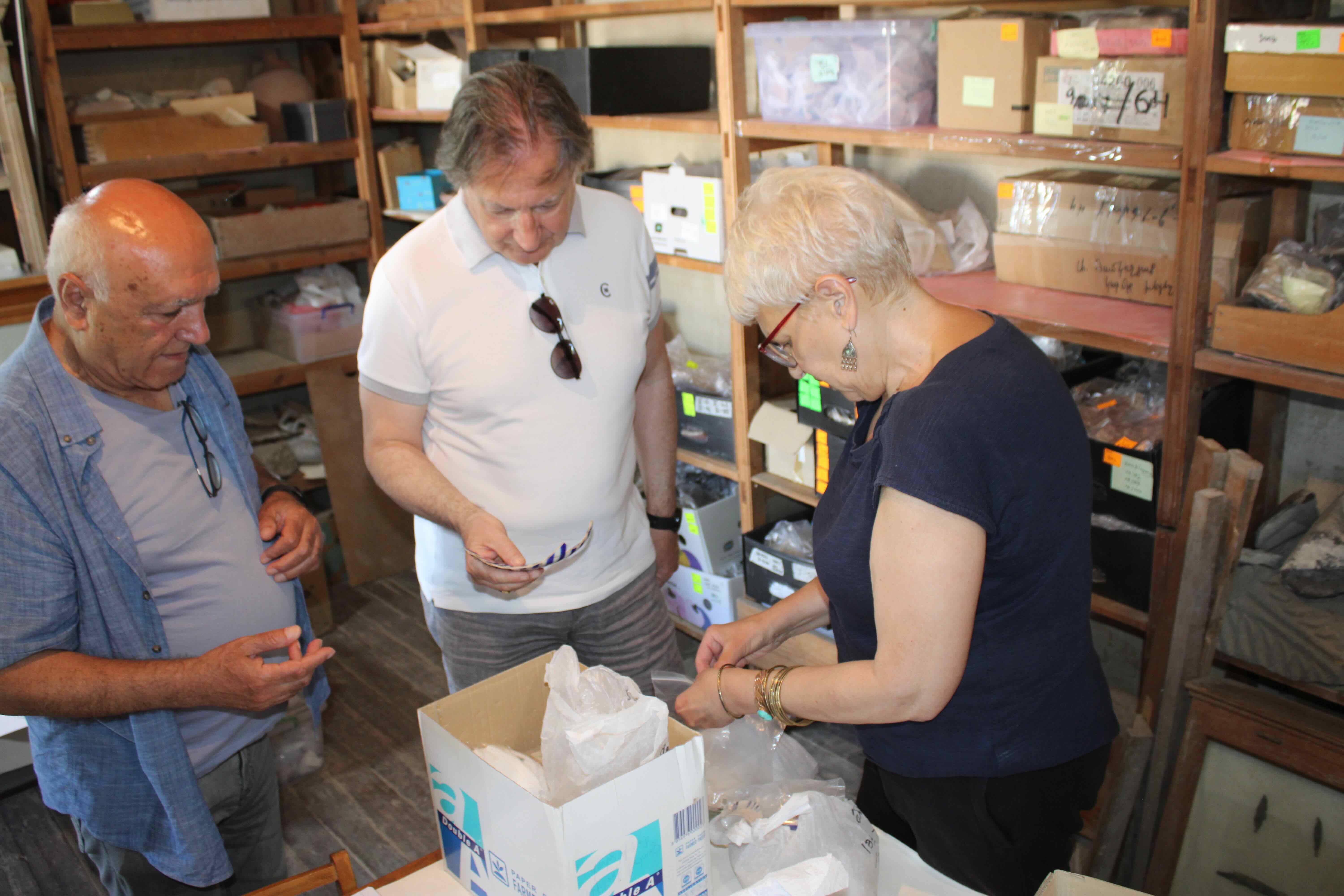
At the centre, H.E. Ambassador Ferranti during a recent visit to the archaeological excavations.
Below is a summary of the video address by the Italian Ambassador to Armenia, Alessandro Ferranti, delivered during the presentation of the ArcheTourDev project at TourismA 2026.
The relationship between Italy and Armenia is ancient, stimulating and fascinating. It is a relationship that has followed its own path from a historical and geopolitical perspective and that, precisely for this reason, deserves to be increasingly strengthened and valued. This bilateral relationship should be given priority because it is rooted in principles that reach deep into the past, while at the same time creating highly relevant and concrete opportunities for cooperation today.
In this context, the role played in recent years by Italian archaeological missions has been exceptional. Armenia is rediscovering its cultural heritage, and its encounter with Italy has proved fruitful and productive. This dialogue is particularly significant within the framework of the friendship between the two countries and Armenia’s aspiration towards Europe. Along this path, its relationship with Italy represents an important point of reference: a way of reaching out to one another and addressing complex and distinctive situations together.
The missions of the University of Florence, ISMEO and other Italian institutions operating in Armenia are helping to rediscover heritage sites that are now being brought back to public attention from a holistic perspective. These initiatives form part of a broader framework of development cooperation and also serve as a driver for tourism promotion.
An extraordinary heritage
An outstanding example is the work carried out at the Garni archaeological site, particularly on the small mosaic floor of the ancient Roman-era thermal complex: a magnificent restoration carried out by the Opificio delle Pietre Dure. Through this intervention, we can discover how Rome was already present in these lands. The Armenian side has expressed deep gratitude to our professionals, who are caring for these heritage assets, rescuing them from oblivion and projecting them into the future.
The same applies to other extraordinary sites, such as Aruch and Dvin. The imposing cathedral of Aruch remained for a long time immersed in an almost bucolic setting, surrounded by fields and a small farming community. Today, it is undergoing a process of rediscovery that is restoring its historical and cultural significance.
Our goal is to create a framework for attention and fruitful cooperation with Armenian institutions, which support Italian activities with great care and sensitivity. This helps strengthen awareness of a heritage that certainly belongs to the Armenian people, but that in some way belongs to all of us as well.
These initiatives are supported by the Italian Ministry of Foreign Affairs and International Cooperation and should be viewed as a concrete commitment to developing bilateral relations between the two countries. Armenia shows gratitude, admiration and friendship towards Italy, together with a sincere desire to embark on a path of study and developmentand to explore different models. The Italian model is of particular interest, and having proposed it today allows us to renew our commitment alongside our Armenian partners.
Growing mutual interest
This year also marks the 350th anniversary of the birth of Father Mekhitar (editor’s note: see further information below), another example of the longstanding ties between Italy and Armenia. The island of San Lazzaro degli Armeni in Venice is an extraordinary place that tells us much about the heritage of Armenian culture and its close connection with our country. Likewise, the Church of San Gregorio degli Armeni in Naples bears witness to the deep traces of Armenian identity preserved in Italy.
This is an ancient relationship that is growing ever stronger. It is no coincidence that, in recent years, the number of visas issued for tourism has tripled. At the same time, significant efforts are underway to liberalise visa requirements for travel to the European Union, with Italy also strongly committed to this process. Today, five Italian cities are connected by flights from Armenia. This demonstrates the growing curiosity of travellers and the mutual interest between our two countries.
Our scholars and researchers are also always welcomed with great gratitude and a spirit of genuine cooperation. The work of Italian researchers brings considerable prestige to our country while also providing momentum towards the future, strengthening a relationship based on friendship, cooperation and shared prospects.
The SAGAS research group has been working in Armenia since 2010, across several regions of the country. In 2021, the ArcheTourDev project was also launched, combining archaeology, development and tourism across three very different sites that reflect the great complexity and richness of Armenian culture.
For me, it is a pleasure to be here today, even if joining remotely, to witness the presentation of the first results of this research, which I always follow with great interest.
Last update
20.08.2026