
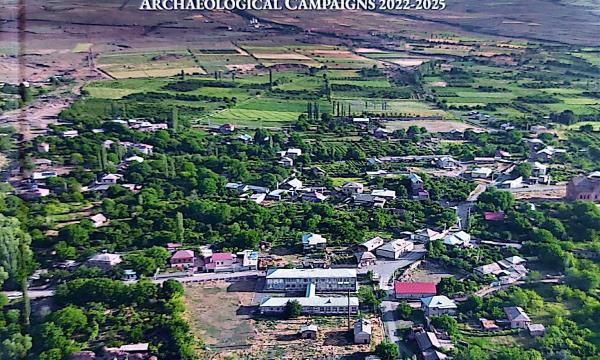
The volume presents the results of the research campaigns carried out between 2022 and 2025 by the Italian-Armenian Archaeological Mission Archaeological Mission of Aruch and the “Incastellamento” of the Silk Road, promoted by ISMEO – International Association for Mediterranean and Oriental Studies, in collaboration with the Institute of Archaeology and Ethnography of the National Academy of Sciences of the Republic of Armenia (IAE NAS RA). The book is authored by two scholars who have long been engaged in the study of Armenia’s historical and archaeological heritage: Sergio Ferdinandi and Astghik Babajanyan.
A medieval archaeologist specializing in settlement archaeology and military architecture, Sergio Ferdinandi serves as Vice President of ISMEO and Honorary President of the Italian Archaeological School of Carthage (SAIC). He brings extensive experience in both academic research and public administration. A Director General at the Italian Ministry of Foreign Affairs and International Cooperation, he has held senior leadership positions in several public institutions, beginning with the Presidency of the Council of Ministers. Alongside his institutional career, he has consistently pursued archaeological research and the protection and promotion of cultural heritage, serving in a variety of roles, including Honorary Archaeological Inspector for the Special Superintendency for the Archaeological Heritage of Rome, expert member of the Italian National Commission for UNESCO, and member of the High Council for Cultural and Landscape Heritage of the Italian Ministry of Culture.
Astghik Babajanyan, an archaeologist holding a PhD in Historical Sciences, is one of Armenia’s leading specialists in the medieval Caucasus. Her research focuses on medieval defensive systems, the Silk Roads, and the urban development of historical Armenia. The author of more than thirty scholarly publications and coordinator of numerous international research projects, she has devoted particular attention to the study of material culture and everyday life in medieval societies.
The volume goes well beyond presenting the results of the excavations. Through an interdisciplinary approach, it reconstructs Aruch’s strategic role within the Caucasian communication network and the broader Eurasian trade routes, while also outlining long-term strategies for the conservation, restoration, and enhancement of the site. Its ultimate aim is to transform one of the most significant places in Armenian history into a model of sustainable development, capable of combining scientific research, cultural heritage preservation, and the growth of local communities.
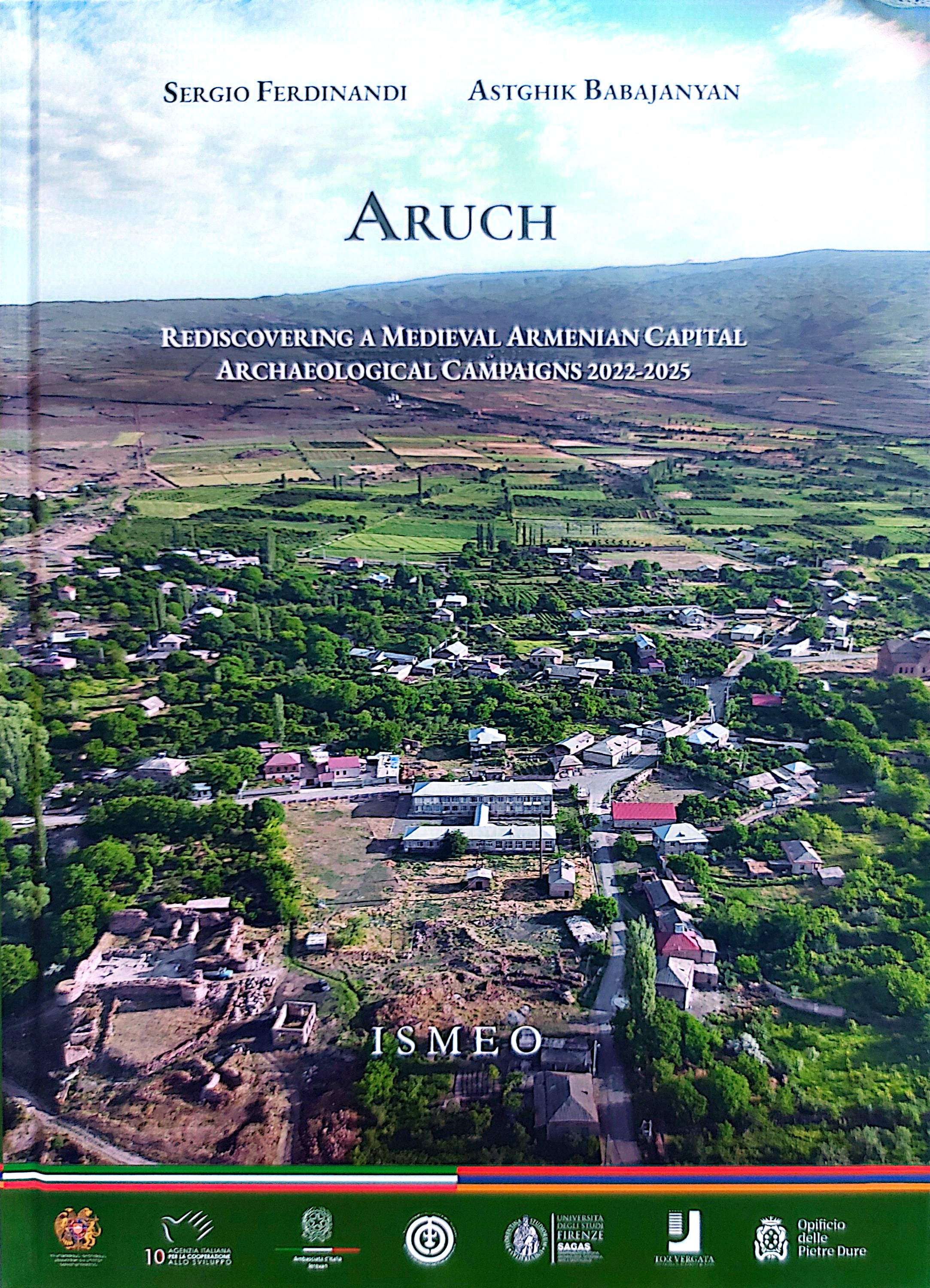
Aruch occupies a unique place in Armenian history. A major political and military center since antiquity, it reached the height of its importance during the seventh century CE under Prince Grigor Mamikonian, becoming one of the principal centers of Armenian power in the delicate period following the Arab conquest of Dvin. Its monumental architecture—above all the celebrated Cathedral of Saint Gregory—still bears witness to the central role this settlement played within the political and cultural landscape of the medieval Caucasus.
We explored these themes with Sergio Ferdinandi, Vice President of ISMEO and director of the Italian mission, who discussed the significance of the recent discoveries, the close relationship established with the local community and landscape, and the future prospects of a project that is set to continue for many years to come.